Bookshelf | About | Reflections | Index

Author: Shabnam Khan

  • Me, Myself and AI

    Many years ago, I wrote a rather humorous article entitled Me, Myself and I. Recently, while looking through some old journals, I came across it again. It made me smile and think about how the world in which I first wrote those words has changed beyond recognition. Today, it almost feels as though another participant has quietly joined the conversation so collectively we have in fact seemed to have become, Me, Myself and AI.

    I never imagined I would one day write about artificial intelligence. In fact, as the idea grew in my mind, I still hesitated because AI does not feature naturally in my lifestyle. In fact I enjoy mostly reflections on literature, memory, the changing seasons of life and the quiet landscape of the human heart, mind and soul. 

    However, our historical archives are a clear record of the fact that every generation of writers has encountered new tools that changed the way they researched, communicated or created. Examples of these changes include: 

    • The printing press changed books.
    • The typewriter changed writing.
    • The internet changed research.

    Artificial intelligence is simply the latest in a series of overwhelming changes. Whether we choose to embrace it, question it or proceed with caution, it has become part of the landscape in which we think and write. Ignoring it entirely would feel as incomplete as accepting it without reflection.

    Ultimately the responsibility of using AI never leaves us and that, for me, is the most important ethical question. My focus was not the “Can AI write?” because I am a writer and I did not need it for that purpose. But my deeper more profound curiosity was:

    “Who remains responsible for what is written?”

    The quality of what emerges depends greatly on the quality of the questions we ask, the guidance we provide, the judgement we exercise and the willingness to challenge what is placed before us. AI can suggest, organise, question and refine, but it cannot replace discernment. It cannot borrow our life experiences, understand our deepest values or carry responsibility for the decisions we ultimately make. That responsibility remains firmly with us.

    AI as we know it and understand it cannot be a substitute for the human experience. Our lives, relationships, struggles, joys and values remain uniquely our own. AI may join the conversation as a thoughtful companion, helping us organise ideas, explore possibilities and examine different perspectives, but it cannot live our lives, make our choices or carry the responsibility for them. The experiences that shape us, and the wisdom we draw from them, remain deeply and unmistakably human.

    Perhaps that is where the real ethical question begins. The question is not simply whether we use AI. The more important question is how we use it. Do we surrender our thinking to it, or do we use it to sharpen our thinking? Do we accept its answers uncritically, or do we challenge AI through the process of questioning, verifying and refining? Do we allow convenience to replace wisdom, or do we remain active participants in the creative process?

    These questions reach far beyond writing. They touch education, creativity, work, relationships and the way we approach knowledge itself. Ultimately, every decision still belongs to a human being. AI cannot sign its name beneath a piece of writing with genuine accountability. It cannot accept praise, criticism or moral responsibility for the words it has helped shape. Only the author can.

    That in itself is both reassuring and challenging. Reassuring because our humanity remains irreplaceable. Challenging because it reminds us that we cannot outsource integrity. Perhaps this is the conversation that matters most. Not whether artificial intelligence will become more capable but whether we will continue to cultivate wisdom, discernment and responsibility alongside it.

    Coming back to my initial human reflection, many years ago, Me, Myself and I reflected a conversation within myself. Today, Me, Myself and AI reflects a conversation between the self, the world we now inhabit and one of the most remarkable tools of our generation. Technology may continue to evolve but ultimately, our responsibility as human beings remains the same.

    This AI reflection has raised more questions than it has answered, and perhaps that is exactly as it should be. I hope to continue exploring these questions through a series of reflections on AI and the human experience. Topics such as responsibility, ethics, discernment, creativity, wisdom and authenticity all deserve thoughtful consideration. My aim is not to provide definitive answers, but to contribute respectfully to a conversation that is only just beginning.

    AI Reflections – A series exploring the human experience in the age of Artificial Intelligence.

    ***
  • Love, Loss and Letting Go

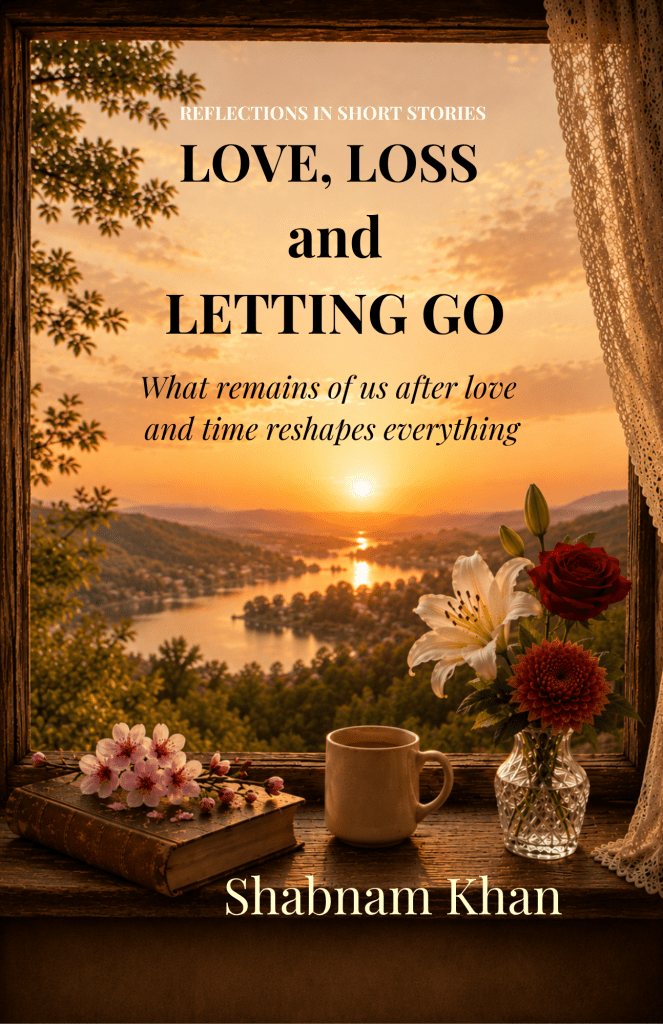
    Love, Loss and Letting Go grew from a simple observation: our lives are shaped not only by the seasons of nature but also by human nature of the heart, mind and soul.

    There are seasons of hope and new beginnings. There are also seasons of companionship and shared lives, of unexpected loss, quiet endurance and the gradual work of learning to let go. Rarely do we remain in one season for long. We move between them, often discovering that each has something to teach us about ourselves.

    This collection of reflective stories follows four women, each standing in a different season of life.

    Miriam represents the hopefulness of spring. Her story explores first love, possibility, and the quiet anticipation of a life beginning to unfold. Like spring itself, she reminds us that love often begins with small moments that gently awaken something new within us.

    Leah embodies the richness of summer. Her story reflects the depth that grows through commitment, shared experiences, ordinary routines, and the enduring strength found in lives woven together over time. Summer reminds us that love is often sustained by countless quiet acts of presence, loyalty, and devotion.

    Sofia walks through the changing landscape of autumn. Her story explores loss, memory, gratitude, and the courage required to release what can no longer be held. Autumn teaches us that letting go is not always about forgetting, but about learning to carry love in a different way.

    Hana inhabits the stillness of winter. Her story is one of acceptance, reflection, and the gentle emergence of peace after profound change. Winter reminds us that rest is not emptiness, and that even the quietest seasons are preparing the ground for renewal.

    Although each woman’s story is unique, together they reflect experiences that many of us recognise in our own lives. Love, growth, loss, and letting go are rarely separate journeys. Like the changing seasons, they return throughout our lives, each inviting us to discover something new about ourselves.

    The characters are fictional, but the emotions they carry belong to the shared human experience.

    I have never wanted these stories to provide easy answers. Instead, I hope they offer something quieter: a place to pause, reflect, and perhaps recognise a part of your own journey within theirs.

    Like the changing seasons, the themes of love, loss, and letting go continue to shape us throughout our lives. Every season has its own beauty, its own challenges, and its own quiet wisdom. Spring invites us to begin, summer to grow, autumn to release, and winter to rest. Together they remind us that no season lasts forever, and that every ending gently prepares the ground for something new, even when we cannot yet see what lies ahead.

    Continue the Journey:

    If these reflections resonate with you, you are warmly invited to continue the journey through Love, Loss and Letting Go – The Book 

    Read the Sample Reader Edition below to explore the opening pages of the book and discover the four seasonal stories from which these reflections have grown.

    If you would like to continue beyond the sample:

    Love, Loss and Letting Go is also available in:

    Paperback and Kindle editions on Amazon

    Open the Sample Reader Edition (PDF)

    ***

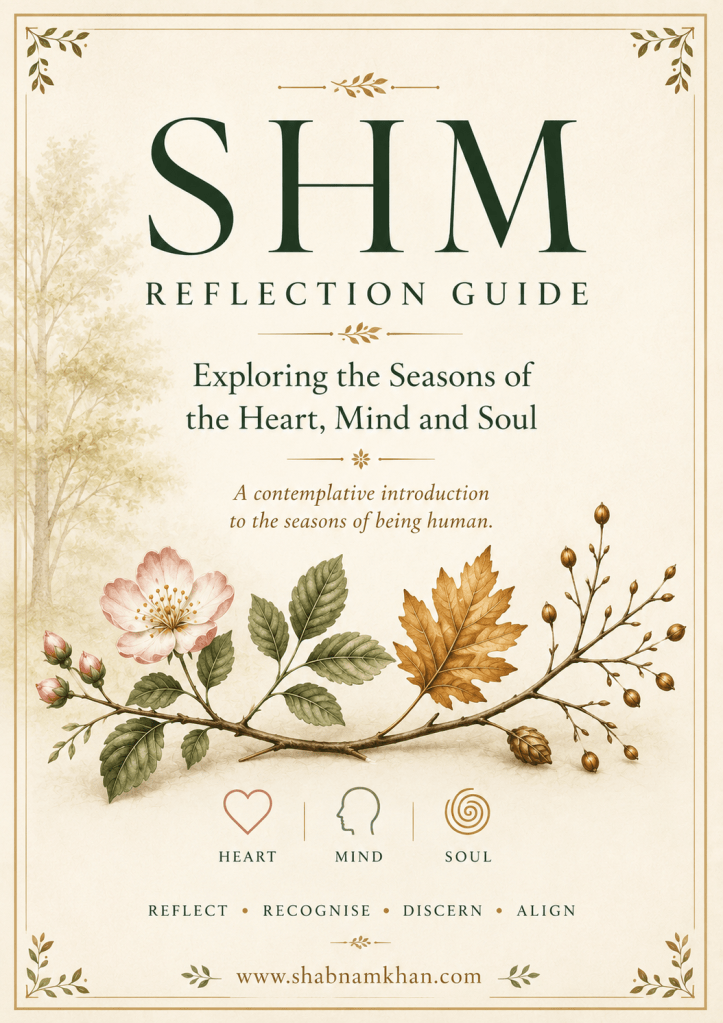
  • Seasons of the Heart, Mind and Soul

    There are seasons in nature that quietly mark the passing of time. Spring brings new beginnings, summer invites growth, autumn encourages release, and winter offers rest and renewal.

    Perhaps our inner lives move through seasons too.

    There are times when the heart is learning to love, to grieve, or to let go. There are moments when the mind is searching for understanding, questioning old assumptions, and discovering new perspectives. There are quieter seasons when the soul calls us to pause, reflect, and return to what matters most.

    These experiences rarely happen in isolation. They weave together, gradually shaping how we see ourselves, relate to others, and navigate the changing landscape of life.

    Over time, I began to notice that many of the themes explored throughout my writing naturally gathered around three interconnected dimensions of human experience: the Heart, the Mind, and the Soul. Rather than becoming another method or system, they emerged as a gentle framework for reflection—a way of noticing how our thoughts, emotions, and deeper sense of self continually influence one another.

    The SHM Website Companion Guide grew from that observation. It offers a quiet introduction to the ideas that sit beneath much of the writing found here, inviting reflection rather than providing conclusions. It is intended simply as a companion—a place to pause, consider, and perhaps recognise something of your own experience.

    The seasons continue to change around us, and within us. Perhaps each one carries its own invitation, quietly asking us to notice, to learn, and to grow in its own time.

    The SHM Website Companion Guide is available to read online or download below.

    ***

  • A Personal Reflection

    There are moments in life when we pause, look back, and realise that what once felt like scattered experiences have quietly become part of a larger story.

    This website, my first published book and the reflections that will follow did not appear overnight. They have grown through seasons of love, loss, learning, questioning, and letting go. Along the way, I have discovered that some of life’s deepest insights are found not in extraordinary events, but in the very ordinary moments, sometimes bordering on the mundane, that invite us to see ourselves more clearly.

    Writing has become one way of making sense of those precious moments. It has allowed me to pause, reflect, and gently explore the questions that many of us carry, even if we do not always have the words for them.

    As these pages continue to grow, I hope they become a quiet place where readers can pause for a while, website something of their own journey, and perhaps leave with a little more clarity than when they arrived.

    Thank you for walking this part of the journey with me and here I would like to pause and greet you with a warm welcome to explore life with each of our unique lenses of understanding and processing the intricate emotional seasons we all experience.

    ***

    A white rose rests on top of two stacked vintage books, with a cup in the background.
  • The Three Pillars


    Life rarely reveals its deeper meaning in dramatic moments. More often it unfolds quietly through experience, reflection, and the gradual understanding that comes with time. The purpose of this space is to explore those moments with care and honesty.


    Over many years of reflection I noticed that many of life’s lessons seem to gather around three ideas. These have gradually become the pillars through which I understand my experiences and observations.


    Alignment
    Alignment is the process of coming into honesty with oneself. It is the quiet work of recognising where our actions, values, and inner voice either agree or fall out of balance. When alignment begins to form, life often feels clearer and more grounded. When we practise alignment, we begin to see life with greater clarity.


    Sovereignty
    Sovereignty refers to personal responsibility and inner authority. It is the recognition that while life presents many influences and pressures, we ultimately remain responsible for how we respond and what we choose to build with our lives. Sovereignty is sustained through integrity – the quiet discipline of living by what we know to be true.


    Stewardship
    Stewardship is the careful tending of what has been entrusted to us: our time, our relationships, our work, and our inner life. It asks us to live thoughtfully and to treat life not as something to consume, but as something to care for and cultivate. In this way stewardship gives our lives a sense of purpose.


    These reflections are not instructions or answers. They are observations drawn from experience. My hope is that readers may recognise something of their own lives within these thoughts and continue the reflection in their own way.

    * * *

    A close-up of two antique books stacked on a wooden surface, topped with a white rose and a green leaf, with a blurred background.
  • The Practice of Reflection


    Reflection is often misunderstood as simply thinking about the past. In truth, it is something much deeper. Reflection is the quiet space in which experience is allowed to settle so that understanding can emerge.

    In a world that moves quickly and rewards constant reaction, reflection asks us to pause. It asks us to look at our lives with honesty and patience, to notice where our actions align with our values and where they quietly drift apart. Without reflection, life easily becomes a series of reactions rather than a process of understanding.

    Through reflection we begin to recognise certain qualities that support a thoughtful way of living. Words such as clarity, integrity, responsibility, humility, patience and care begin to take on deeper meaning. They are no longer abstract ideas, but practical guides for how we move through our days and how we treat the lives entrusted to us.

    Integrity, in particular, grows naturally from reflection. When we allow ourselves to observe life honestly, we begin to recognise where truth asks something of us. Integrity is simply the willingness to honour that truth in our actions.

    Reflection does not promise perfection or easy answers. Instead it offers something quieter and more enduring: the opportunity to live with awareness. It reminds us that a meaningful life is not built through dramatic moments, but through small acts of attention, honesty, and care repeated over time.

    For this reason reflection sits at the heart of this space. It is the practice that allows clarity to emerge, alignment to develop, sovereignty to take root, and stewardship to guide how we care for what has been given to us.

    * * *

  • A Quiet Beginning

    There comes a moment when reflection stops being being private and begins to take form. For many years my thoughts have lived in journals, notebooks and quiet conversations. They were written simply to understand life more clearly – to notice patterns, question assumptions and explore what it means to live with integrity.

    This space is an extension of that habit. Here I will share reflections on three themes that have gradually become central to my thinking: alignment, sovereignty and stewardship.

    Alignment is the work of recognising what is true within ourselves.

    Sovereignty is the courage to stand in that truth with dignity and calm authority.

    Stewardship is the responsibility of living from that truth in the world.

    None of these ideas are abstract. They are tested through everyday life – through relationships, decisions, mistakes, growth and time.

    For now this page simply marks the beginning.

    * * *

    A close-up of two vintage books stacked on a wooden surface, topped with a white rose and a green leaf, with a blurred background featuring a cup.